

The Ancient Cipollino Quarries
If you ever find yourself on the rugged, windswept southern tip of Evia—Greece’s second-largest island—you’ll quickly realize that the landscape has a story to tell. It’s a story told in stone. While most travelers flock to Greece for the gleaming white Pentelic marble of the Parthenon, South Evia holds the monopoly on a entirely different, mesmerizing stone: Cipollino marble (or Marmor Carystium, as the Romans called it).
The Downhill Descent: The "Kylindri" Logic
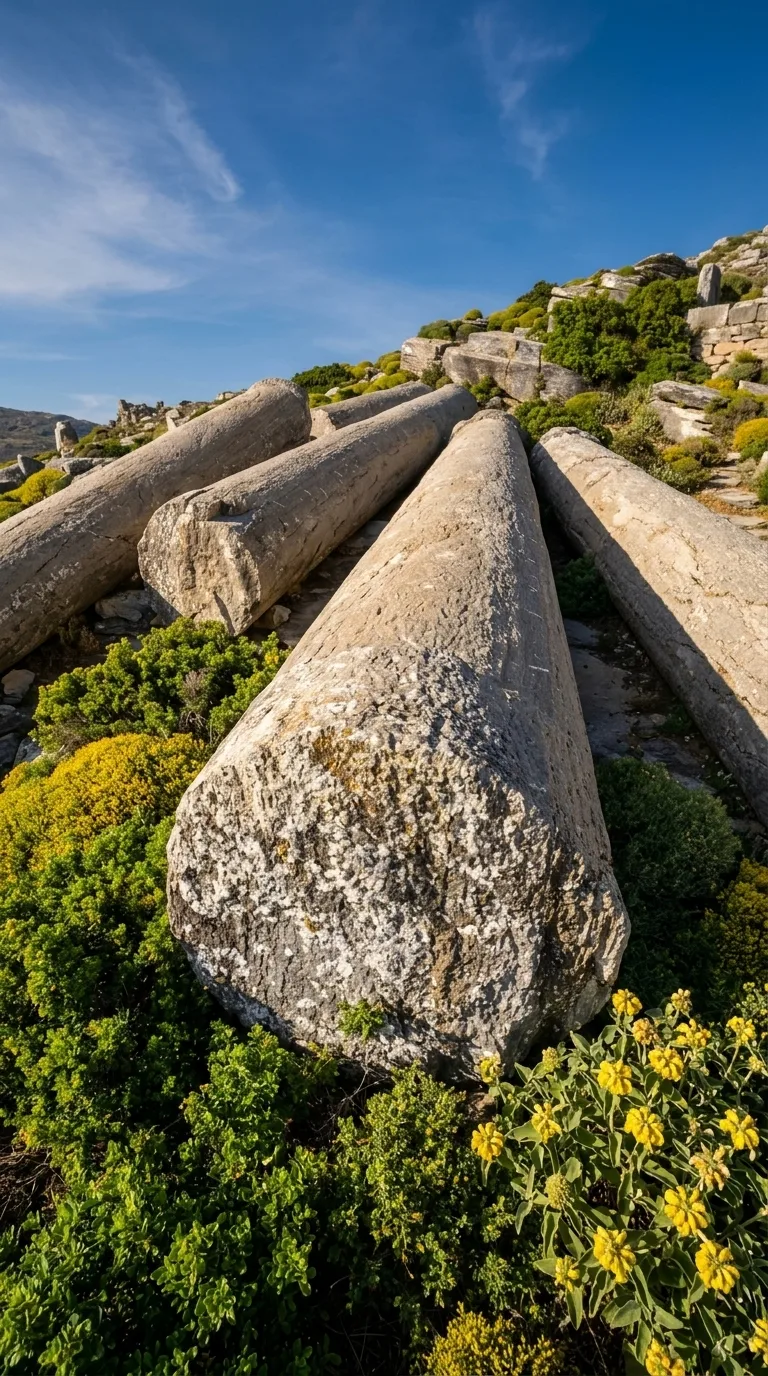
The name of the main quarry site, Kylindri (The Cylinders), isn't just descriptive of the columns themselves—it is a direct clue to how they were transported. Because the columns were rough-hewn into perfect cylinders right at the quarry face, the Romans utilized gravity to move them. Rather than trying to lift these immense weights onto standard carts, engineers wrapped the monolithic cylinders in massive wooden frameworks or "wheels."
Quick Logistics for the Trail
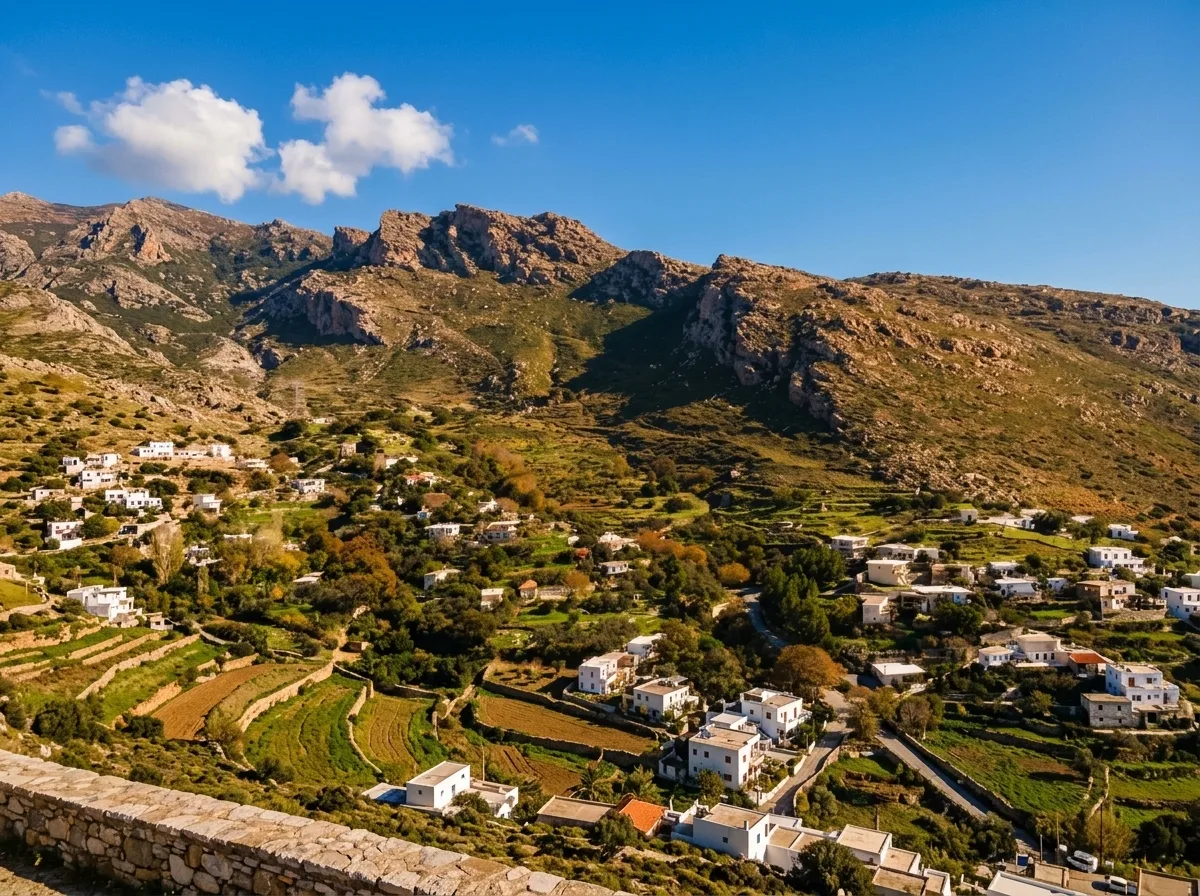
Starting Point: Begin your walk in the lush village of Myloi, just a 10-minute drive inland from Karystos town.
Duration: The hike from Myloi up to the main Kylindri site is a steady uphill climb that takes roughly 45 to 60 minutes one way.
Terrain: The trail is rocky and exposed. While it is highly rewarding, it offers very little shade, so packing sufficient water and starting early in the morning is essential.
Shadows of Empire: Walking Among the Giant Ancient Columns
If you are a history buff, a hiking enthusiast, or someone who loves uncovering the literal foundations of the ancient world, a trek to the ancient Karystos quarries is like stepping onto an abandoned Roman construction site frozen in time.
What is Cipollino Marble?
The name Cipollino comes from the Italian word for onion (cipolla). It’s an incredibly fitting nickname. The marble is a stunning metamorphic rock featuring wavy, undulating bands of green chlorite, white calcite, and grey mica. When cut, the layers look exactly like the cross-section of a green onion—or, as the ancients preferred to see it, the rolling waves of the Aegean Sea.
Because of its unique, dramatic pattern and incredible structural integrity, it became one of the most sought-after luxury building materials in the Mediterranean.
[The Marble Route]
Karystos Quarries ➔ Port of Marmari ➔ Rome, Athens, & Beyond
When Rome Fell in Love with Evia
While extraction began as early as the 2nd century BC, things truly exploded during the Roman Imperial period under Julius Caesar and Augustus. Rome was undergoing a massive transformation from a city of brick to a city of marble, and Cipollino Verde was the imperial favorite.
The Romans didn’t just want small blocks; they wanted monoliths—massive, single-piece structural columns. The quarrying landscape on the southern flanks of Mount Ochi became an industrial powerhouse. The operation was massive:
The Export Hub: The nearby coastal town of Marmari became the main shipping port exclusively for exporting this marble. The activity was so intense that a temple dedicated to Apollo was erected there to bless the voyages.
The Reach: Karystian columns shipped out across the entire Empire. You can still see them today standing tall in Hadrian’s Library in Athens, the Roman Agora in Rome, and even as far away as Byzantine churches in Constantinople and ruins in Britain.
The Highlight: Standing Among the “Kylindri”
The most breathtaking place to witness this history is a site known to locals as Kylindri (The Cylinders), located at the top of the valley of Myloi, nestled between the mountain villages of Mekounida and Aetos.
Imagine this: You’re hiking up a quiet mountain path, surrounded by wild thyme and grazing goats, when suddenly you stumble upon columns the size of spaceships.
Lying right there in the dirt, exactly where Roman workers left them nearly 2,000 years ago, are several giant monolithic columns measuring roughly 12 meters (39 feet) long. They are fully hewn from the rock but completely intact.
Why were they left behind?
It’s an eerie feeling to stand next to them. Why abandon such high-value, labor-intensive treasures?
Historians suggest that around the 3rd century AD, sudden military alerts, barbarian invasions, and the creeping instability of the Roman Empire forced the overseers and legionaries to abruptly abandon the site. When the money and the military protection dried up, the workers dropped their tools, leaving these massive stone giants to sleep in the Evian soil forever.
The “Dragon Houses” Connection
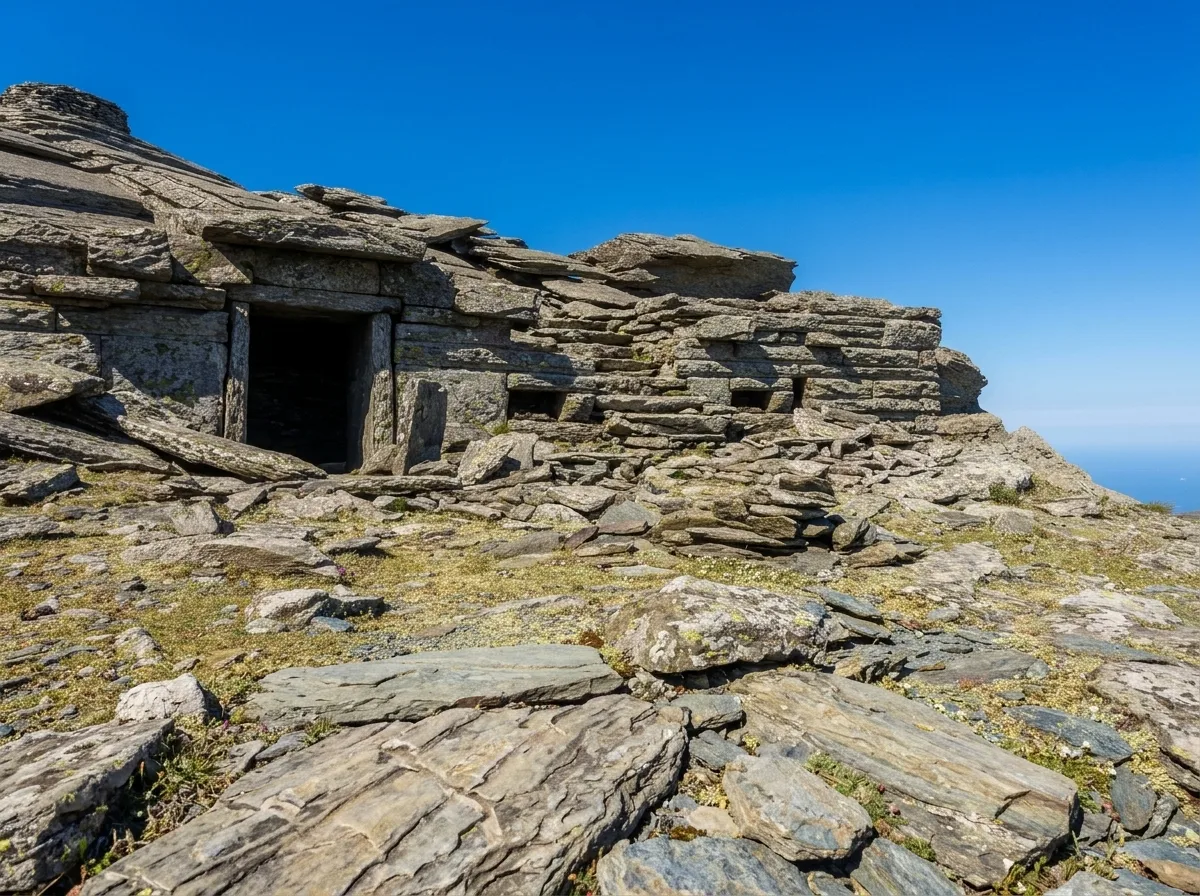
You can’t talk about the Karystos quarries without mentioning the area’s other great mystery: the Drakospita (Dragon Houses). These are ancient, megalithic structures scattered around Mount Ochi, built with massive stone slabs without any mortar.
While their exact origin is still debated, a compelling theory links them directly to the quarries. Many researchers believe these structures served as sanctuaries or watchtowers for the Roman legions who guarded the enslaved laborers and quarrymen. Some think they were temples dedicated to Hercules—the patron style-hero of quarrymen—offering the workers a place to pray for the immense strength required to haul 12-meter stones down a mountain.
How to Visit the Quarries Today
The ancient quarry network is remarkably well-preserved, largely because it remains one of the least disturbed industrial landscapes of antiquity in the Mediterranean.
The Hike: You don’t need expert mountaineering gear. A mild-to-moderate trek from the valley of Myloi will take you up through the old trails. Several clearly marked walking paths weave right through the ancient cutting fronts.
What to Look For: Keep your eyes on the ground and the cliff faces. Beyond the famous Kylindri, you’ll see ancient chisel marks in the rock, steps carved into the cliffs where blocks were split, and even small circular structures used by ancient workers to collect water for washing their iron tools.
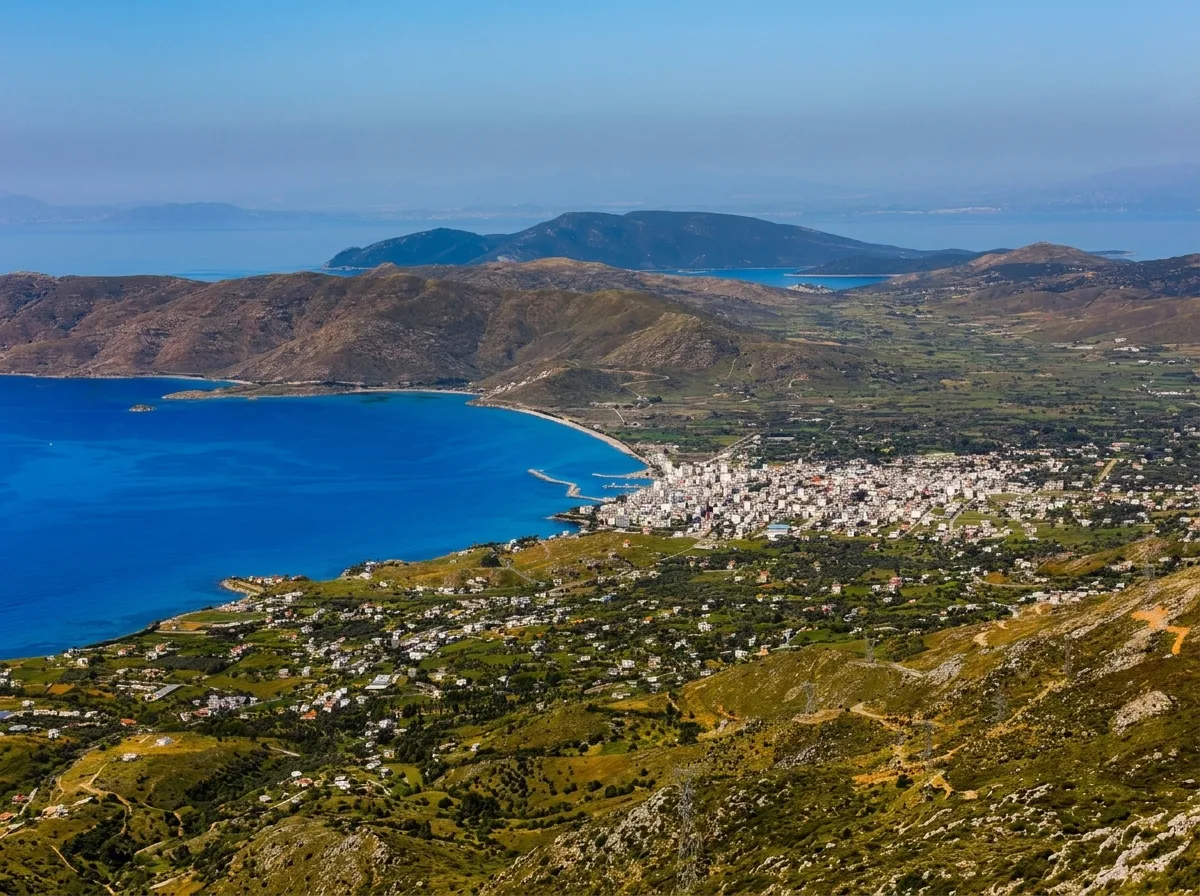
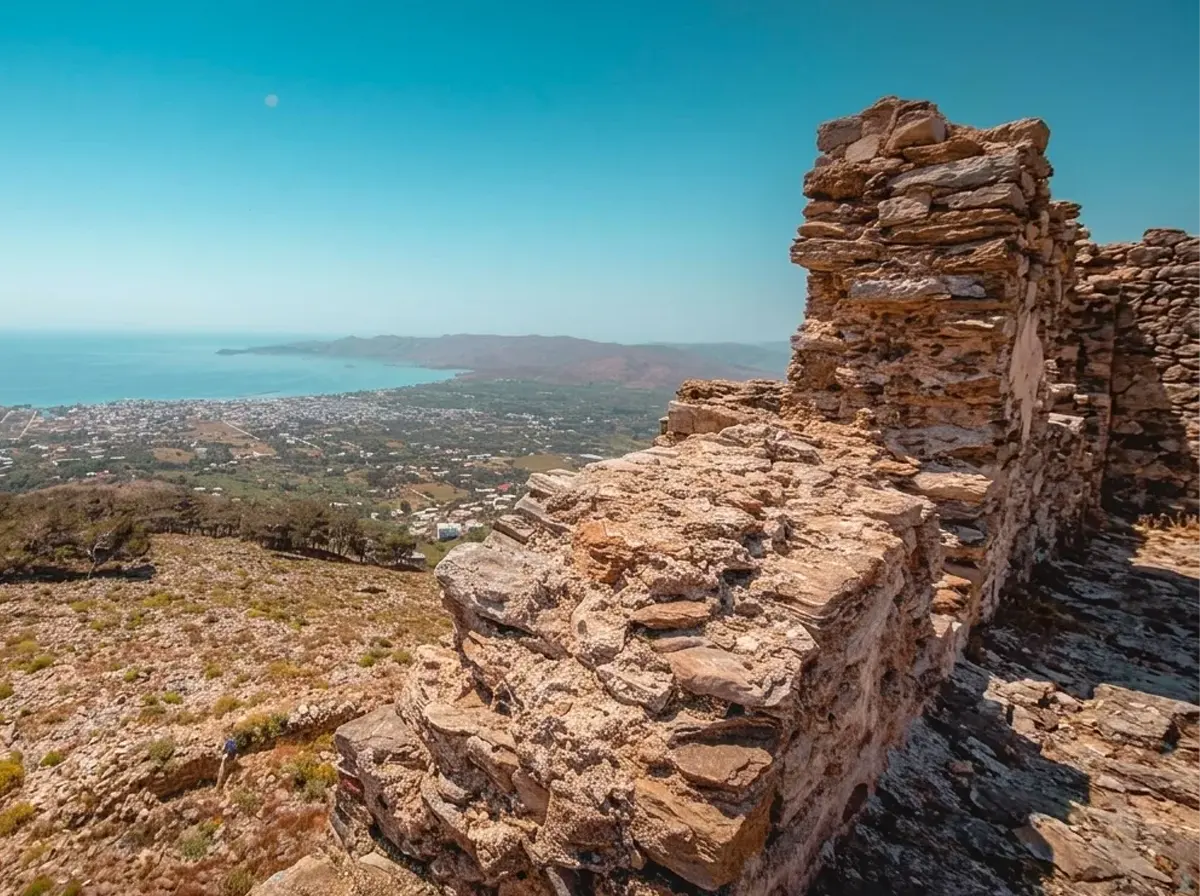
The Reward: Aside from the mind-boggling history, the quarries offer a spectacular, panoramic view of the valley and the sparkling blue expanse of the Karystos Bay below.