

Mt. Ochi & The Dimosari Gorge
Rising above Karystos, the vertical axis of Mt. Ochi and the Dimosari Gorge offers a premier trekking corridor where ancient archaeology meets a protected wilderness. This Natura 2000 site preserves a unique ecological transition, guiding travelers from high-altitude megalithic mysteries down through a lush, riparian canyon directly to the Aegean coastline.
Mt. Ochi & The Dimosari Gorge
Rising above Karystos, the vertical axis of Mt. Ochi and the Dimosari Gorge offers a premier trekking corridor where ancient archaeology meets a protected wilderness. This Natura 2000 site preserves a unique ecological transition, guiding travelers from high-altitude megalithic mysteries down through a lush, riparian canyon directly to the Aegean coastline.
The Summit of Mt. Ochi & The Enigmatic “Dragonhouses”
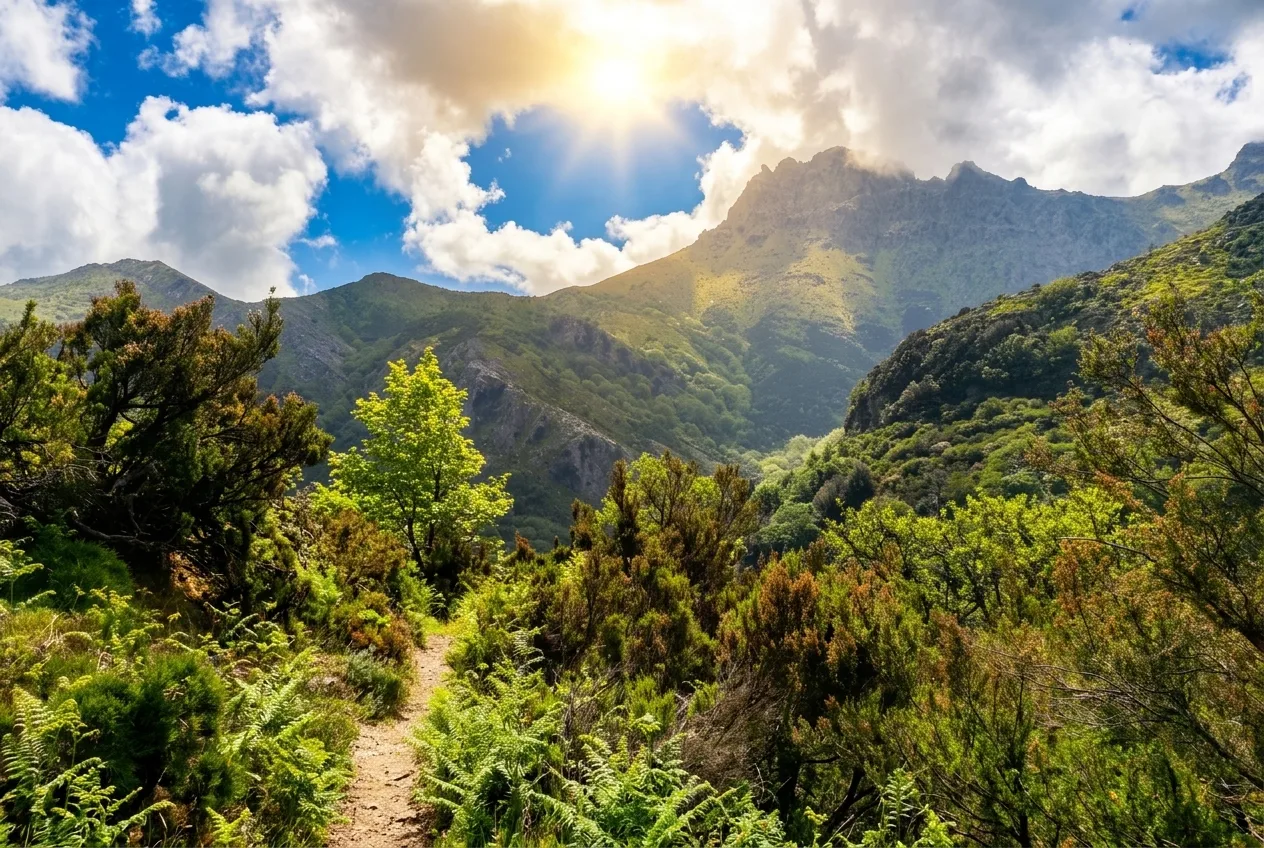
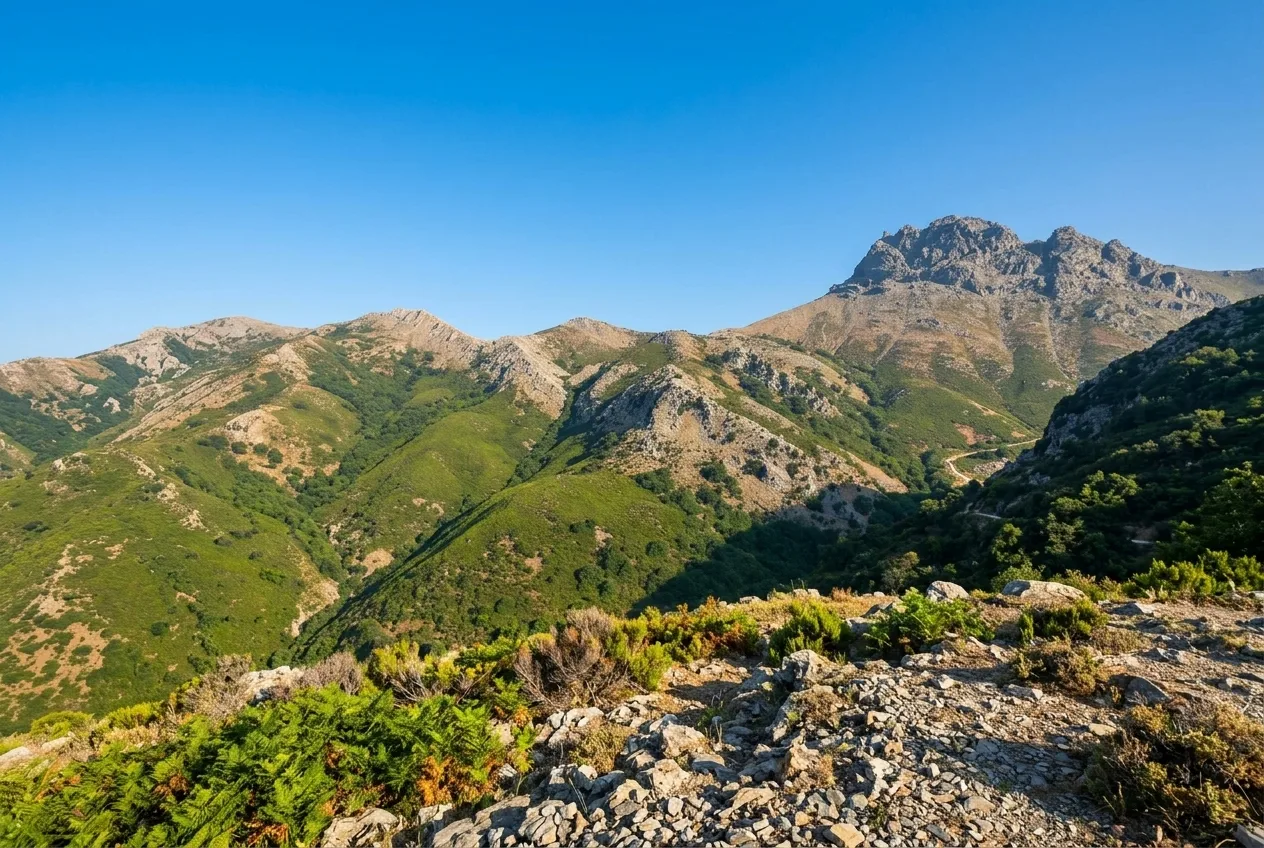
The ascent up the barren, wind-swept ridges of Mt. Ochi feels like entering an open-air geological theater. The mountain commands the tempestuous Cavo D’Ouro strait, acting as a massive thermal barrier that captures maritime winds and shifting mists.
The Megalithic Puzzle: The Drakospito
Perched near the rocky summit at 1,389 meters sits the most intact and architecturally significant specimen of Evia’s 25 mysterious Drakospita (Dragonhouses).
               [ Corbelled Limestone Slabs ] (No Mortar)
                            ▲
                            │
   [ 1.5m Thick Walls ] ────┼────► [ 10-Ton Monolithic Lintened Entry ]
                            │
                            ▼
          [ 12.7m x 7.7m Ancient Structural Envelope ]
The Architecture: Built entirely of massive, elongated limestone slabs without a shred of mortar, the structure relies purely on gravity and precise counter-weighting. The roof is a masterclass in ancient engineering, utilizing a corbelled vault system where successive stone layers protrude inward until meeting at a central, narrow apex.
The Engineering Anomaly: The entry features a staggering monolithic lintel measuring 4 meters in length and weighing an estimated 10 tons. How ancient builders hoisted this metric weight to an isolated mountain peak without heavy machinery remains a subject of intense architectural debate.
The Purpose: While local folklore attributed these megaliths to superhuman “dragons,” excavations have unearthed animal bone fragments and pottery sherds dating from the 6th to the 2nd century BCE. Archaeologists suggest the site served as a high-altitude sanctuary dedicated to the cults of Zeus and Hera.
Descending The Dimosari Gorge
Directly below the alpine ridges of Mt. Ochi lies the northern gateway to the Dimosari Gorge, one of the most pristine river-canyon treks in southeastern Europe. The trail spans approximately 10 kilometers, dropping from an altitude of 954 meters down to sea level.
The Trekking Itinerary: Petrokanalo to Kallianos Beach
[ START: Petrokanalo Col ] (954m)
         │
         ▼ (Cobbled Path / Medieval Skala)
[ MIDPOINT: Lenossaioi Village ] ──► Waterfalls & Natural Limestone Pools
         │
         ▼ (Gentle Riparian Grade)
[ END: Kallianos Beach ] ──► Aegean Sea Coastline
1. The Upper Descent: The Ancient Stone Path
The trek begins at the Petrokanalo Col. Hikers step onto an ancient, deep-set stone path (kalderimi) that dates back to the Byzantine and Medieval eras. For centuries, this path was the sole terrestrial lifeline connecting the isolated villages of the Cavo D’Ouro coast with the harbor town of Karystos.
2. The Canopy and the Riparian Corridor
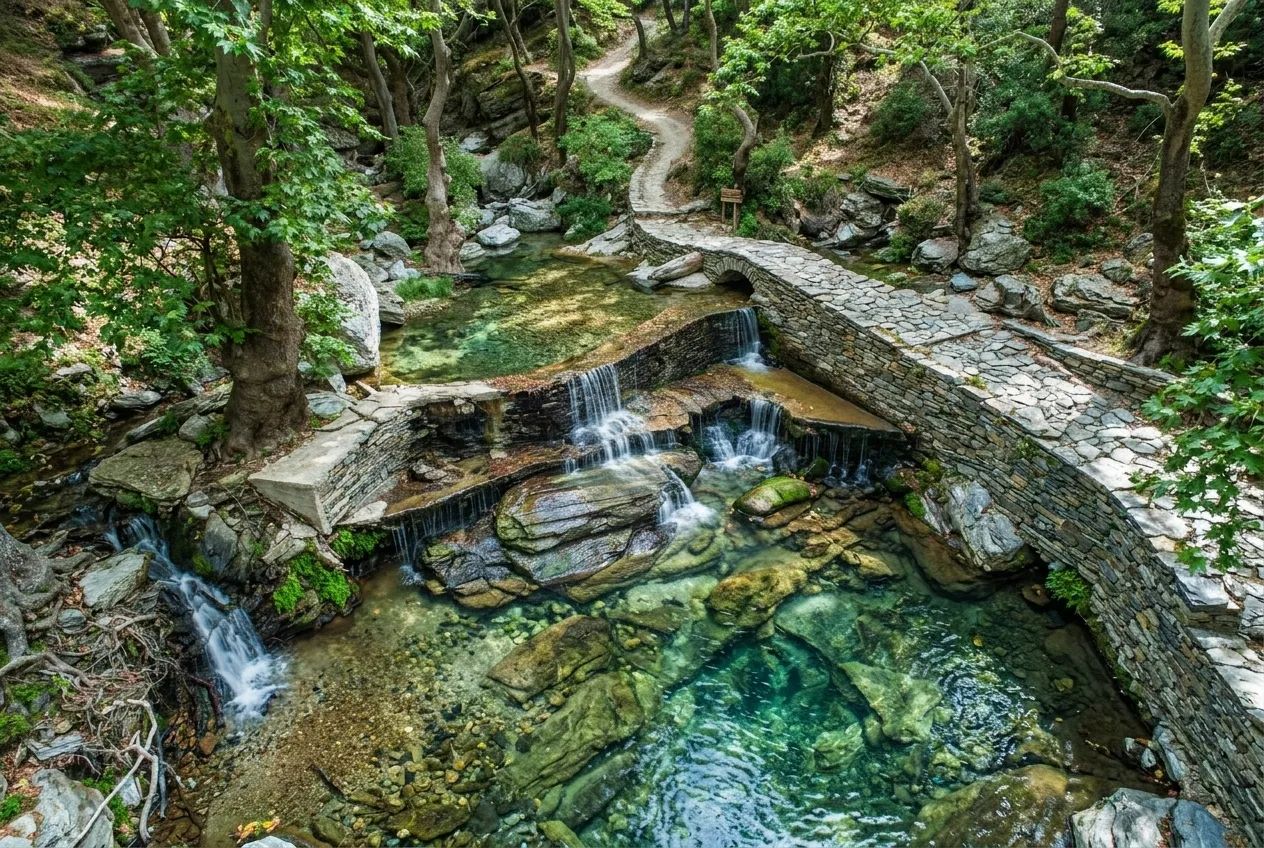
As the gorge deepens, the landscape transitions rapidly from arid mountain crags to a dense, shaded gallery of old-growth vegetation. The trail runs parallel to the active Dimosari stream, shaded by a continuous canopy of:
- Centuries-old Plane Trees (Platanus orientalis)
- Wild chestnut and ancient oak groves
- Fragrant wild pear and olive trees
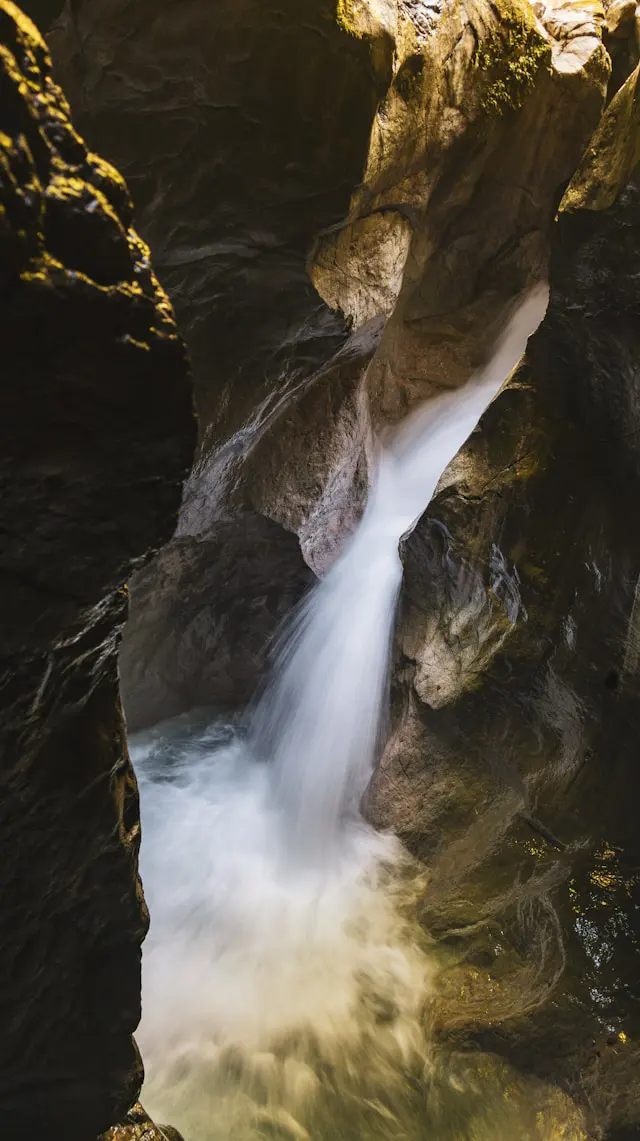
3. The Pools of Skala Lenossaia
Reaching the halfway marker near the isolated settlement of Lenossaioi, the trail encounters dramatic rock shelves and narrow ravines. Here, the stream forms a series of cold, emerald-tinted natural limestone pools and waterfalls. These pristine basins offer hikers an ideal point for a refreshing, high-altitude dip amid blue dragonflies and nesting birds of prey, such as the short-toed snake eagle.
4. The Terminus: Kallianous Beach
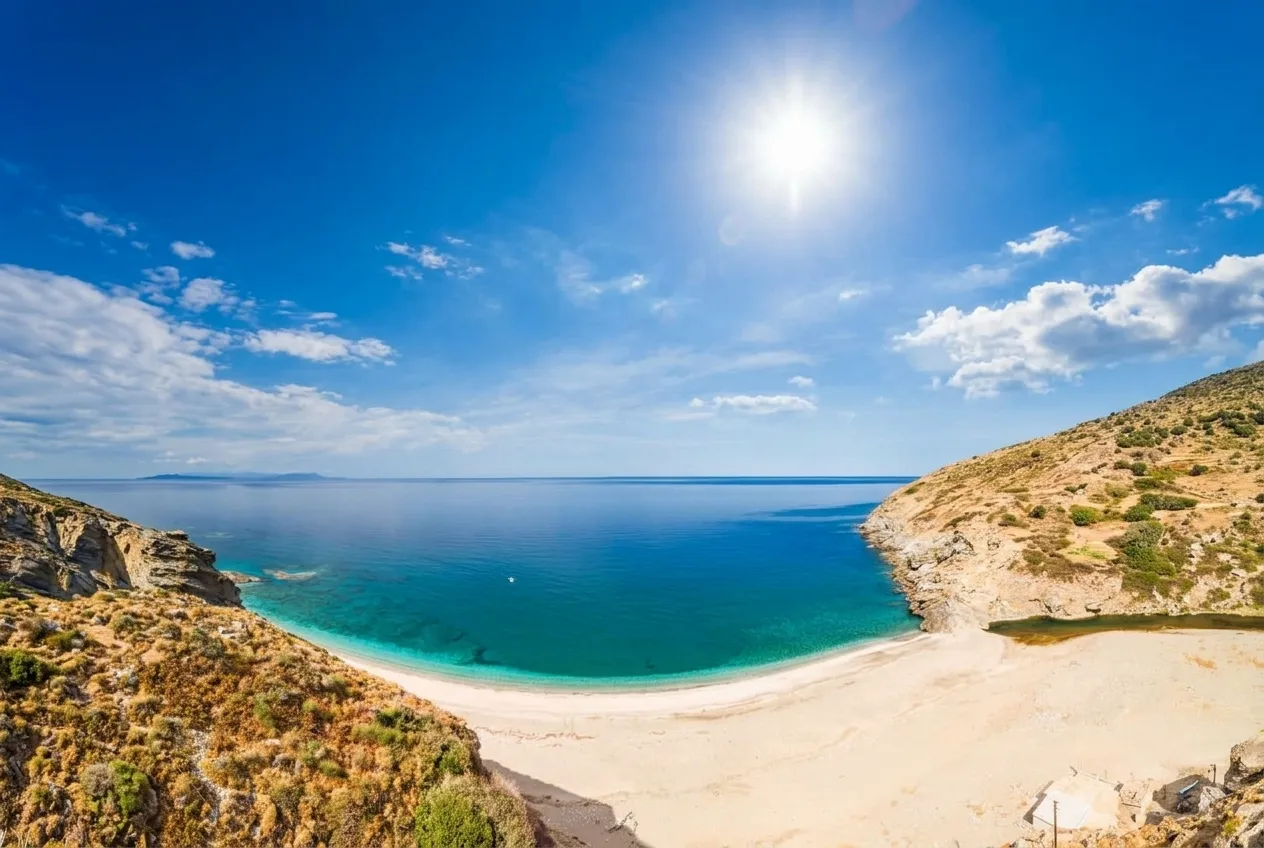
The final leg of the gorge eases into a wide, gentle valley flanked by traditional dry-stone agricultural terraces. The trail concludes dramatically where the river valley cuts directly through the coastline into Kallianous Beach, a wild, pebble-strewn shore facing the open Aegean Sea.